

For authors, the release of a new publication is a highlight of our careers. The work is finished, and it’s time to celebrate. I’m excited to announce that Jeri Westerson’s new book, The Vampyre Client, will be released on May 1, with the audiobook on May 12. Click Here.
Jeri is a prolific writer of Sherlock Holmes pastiches, a variety of mystery novels and stand-alones, from Medieval, Tudor, Sherlockian, and LGBTQ Mysteries, to Historicals and Paranormals. Check out her website to view Videos of interviews, panel discussions, and her book trailers. Subscribed to her FREE monthly Newsletter with articles and lots of fun stuff. Jeri Westerson
Today, Jeri is writing about how Arthur Conan Doyle, Louisa May Alcott, Dorothy Sayers, Dashiell Hammett, Raymond Chandler, and more have influenced her writing.
An Irregular Detective and the Penny Dreadful
In my Irregular Detective Mystery series (a Sherlockian pastiche), one of my protagonists Tim Badger, who was one of Holmes’ former Baker Street Irregulars, is the model customer for penny dreadfuls. He comes from the East End of London and likes reading the supernatural ones about ghosts, ghouls, and vampires. One of his favorites is VARNEY THE VAMPYRE OR THE FEAST OF BLOOD, a serialized penny dreadful of enormous volume, that eventually was printed into two, thick novels. That’s what gets a Cockney bloke excited, but he also partially believes that these creatures are real, and his colleague, the more commonsense bloke Ben Watson, take on the mystery of THE VAMPYRE CLIENT, releasing May 1st, as a case they can truly sink their teeth into. 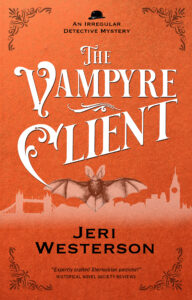
Sir Arthur Conan Doyle liked them too, or at least made note of them when he penned THE HOUND OF THE BASKERVILLES, The Adventure of the Sussex Vampire, and The Adventure of the Creeping Man. But unlike those penny dreadful supernatural tales that he was clearly emulating, his logical protagonist Sherlock Holmes didn’t fall for any of that piffle. He reasoned through the method that we were not seeing what we thought we were seeing. It was the Scooby gang tearing off the rubber mask of the amusement park owner to prove it had never been a ghost after all, but a scheming, greedy human being at the heart of it. Which was funny, because as you must know, Doyle was an aficionado of séances and other mysticism…including fairies. I tip my hat to him for his integrity as a writer and being true to his own creation, who was a logical man who would never believe in a magical explanation when the method would reveal the rational one.
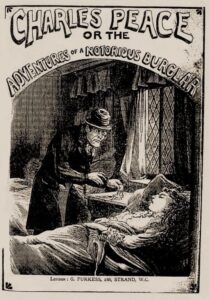
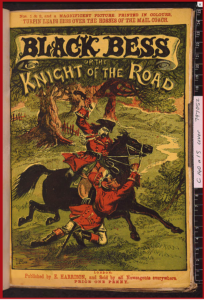
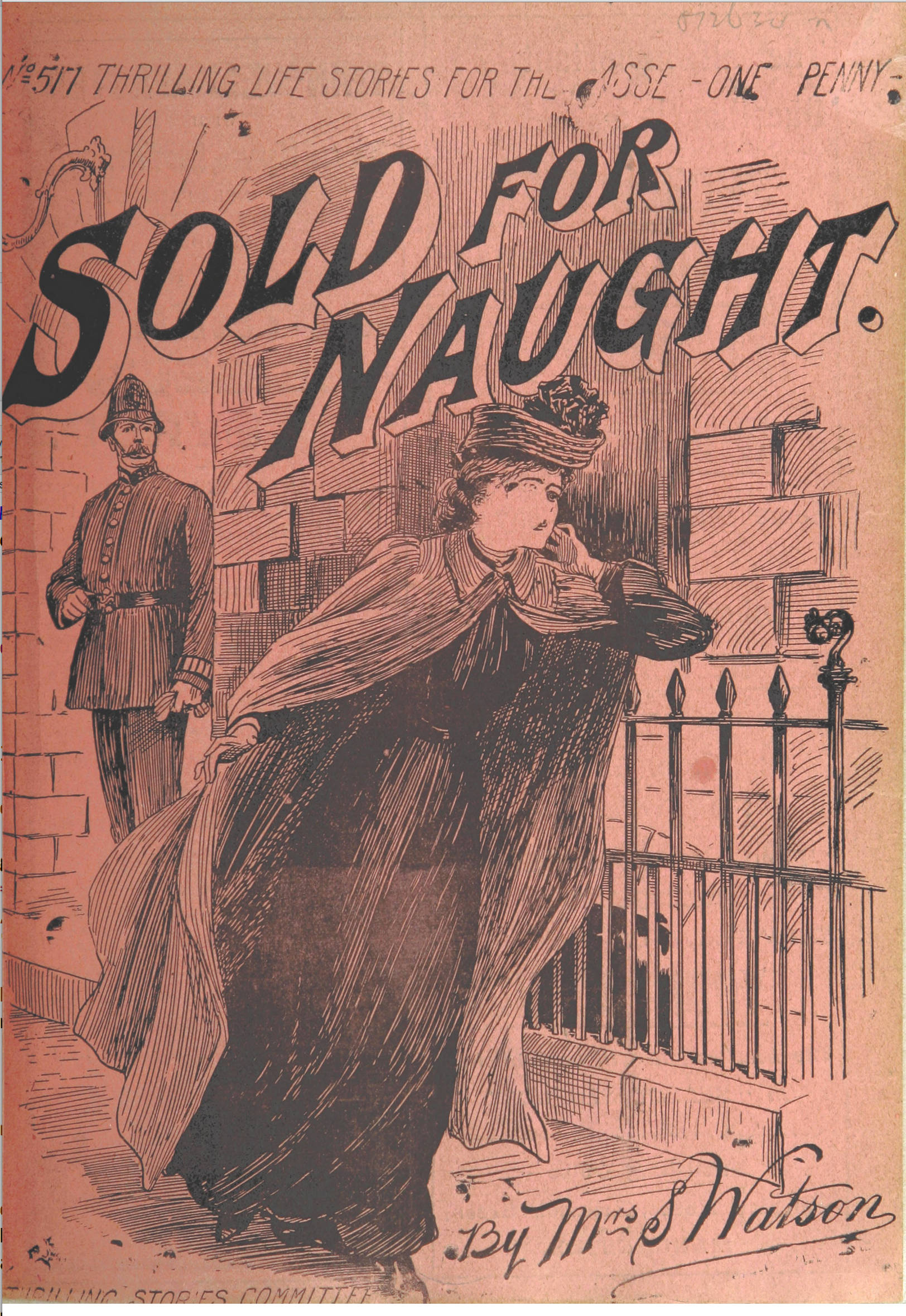
Penny dreadfuls spanned the genre, not always supernatural. Sometimes they were romantic stories of love with villains making it difficult for love to triumph. The old trope of a moustache-twirling villain forcing unspeakable acts onto innocent woman who “could not pay the rent” is part of these oft used scenarios. And in fact, these unsavory melodramas kept young female authors afloat writing some pretty dreadful stories for the masses. For one, Louisa May Alcott, writer of the immensely popular LITTLE WOMEN, started her writing career penning such penny dreadfuls, just as her character Jo March did in LITTLE WOMEN. At least one such penny dreadful had come to light in 1995. A MODERN MEPHISTOPHELES, OR THE LONG FATAL LOVE CHASE was submitted to Alcott’s publisher, but they rejected it as being too long and too sensational (was that even possible?) Even after revising and editing it down to FAIR ROSAMUND, it was still rejected. The manuscript languished and was later discovered in Harvard’s Houghton Library in 1994, and then auctioned off to Kent Bicknell, headmaster of the Sant Bani School in Sanbornton, New Hampshire. He sold the rights to Random House and used some of the advance and royalties to support the school.
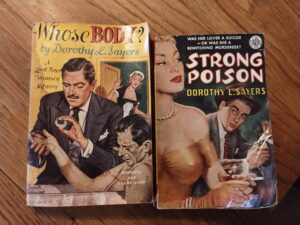
In America in the 1920s, 30s, and 40s, we had pulp fiction (so called because the books were printed with cheap paper and could easily be pulped when done reading them). But some were little masterpieces and were written by the best of the best of crime writers like Cornell Woolrich who wrote the short story on which the film Rear Window is based, and many other well-known writers such as Dorothy Hughes, Dashiell Hammett, and Raymond Chandler. Sold for 10 cents they were also for the working class, but their style and literary value were highly praised then as now. Many attained celebrity status and got reprinted from time to time in novel or novella format, and many were also made into films. I myself have collected quite a few pulp books, not just for the enjoyment of the stories, but for the lurid covers, even for some of Dorothy L. Sayer’s Lord Peter Wimsey titles, decidedly not pulp books, with covers that have very little to do with the stories.
I think I know why Doyle chose to mine the fertile fields of the penny dreadful for some of his Holmes’ tales. It’s why I do it with this pastiche series of my own. Because it’s dreadfully fun! But are there real ghosts and vampires in my Sherlockian pastiches where I try to stay as close to Doyle’s canon as possible, or are my detectives talented enough to ferret out fiction from fact?
No spoilers here. I suppose you’ll have to read them to find out.
3 Responses
Thanks for being my guest today on Writer Wednesday. Best of luck with The Vampyre Client.
Thank you for having me, Kathleen!
Very nice to meet another Sherlock fan, mystery writer, and friend of Kathleen!