

Growing Up Catholic in a Small Texas Town: Jesus and the Women
When I was twenty-three, I left the Catholic Church.
I had been struggling with my faith—too afraid to leave, not certain I wanted to stay. Then one Sunday, during Mass, the priest declared that a woman’s place was in the home. It was the early 1970s, at the height of the Women’s Liberation Movement, and I sat there stunned. It took every ounce of restraint not to walk out during the homily. I left that morning, believing that women had no place in the Church—that they were meant to be subservient, and always would be. I knew I wasn’t coming back.
I told myself women had no place in the Church—that they were meant to be subservient, and always would be.
My unholy hiatus lasted ten years. What followed was a slow, uneven return that took even longer, until, two years ago, I came back for good—out of something close to emotional desperation. Since then, I’ve embraced the Church’s teachings and now serve as a Eucharistic minister, assisting in the distribution of Communion. Those years away came back to me this Easter.
Holy Week was a full one: preparing the church for Good Friday and Easter, attending Holy Thursday and Good Friday services, and praying the Stations of the Cross. By Sunday morning, I was ready—eager, even—to celebrate the Resurrection. I skipped the three-hour Easter Vigil the night before, knowing I’d be serving at the morning Mass.
Compared to the intensity of the week, the service felt calm and almost intimate—one priest, one altar boy. Seated in the front pew with the other Eucharistic ministers, I glanced around and took stock—not of the congregation, but of those leading the service. The rosary leader, the one who gave the welcome, the person who read the first gospel reading, the one who read the second gospel, and the five of us distributing Communion.
Nine in all.
Nine women.
I don’t know what shaped that priest’s homily fifty years ago, but he was wrong, and I no longer resent him.
Women have always been central to Jesus’s ministry: Mary Magdalene, often called the apostle to the apostles; Mary of Clopas at the crucifixion; Joanna, the wife of Herod’s steward; Susanna; Mary and Martha of Bethany; Salome; and countless others—many of whom Jesus healed, all of whom followed, supported, and witnessed.
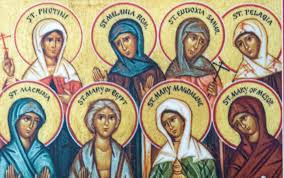
And, of course, his mother.
Enjoy the clip from The Chosen. If it’s all you’ve seen in the series, it would have been enough.