
Do you ever wonder why you like the things you like? Why you are the way you are? The science of genetics leans strongly on the DNA in your genes to answer these questions. Identical twin studies support this with some unbelievable insights. Even though our environment doesn’t alter our genetic makeup, it can influence our likes, dislikes, preferences, behaviors, and the choices we make. Or is it all just serendipitous?
Lately, I’ve been thinking a lot about my ancestors. I’m Czech; there’s no doubt about that. However, there’s so much I don’t know about my ancestors. Someone in my family wrote a 32-page history of my maternal great-grandparents. My great-grandfather, Jan Hejl, was born in 1857 in the Bohemian-Moravian Highlands. My great-grandmother, Antonia Burian, was born in 1861 in near Krinarov. Her parents died when she was young, and she was handed over to different relatives. It was written that she used to take long walks through a meadow, crying and praying to the Virgin Mary to alleviate her suffering and loneliness. One day, the Virgin Mary appeared to her, telling her not to cry, that everything would be fine. It is said that my great-grandmother never cried again. She married Jan Hejl when she was nineteen. They had ten children: Francis, Anton, Method, Anastasia, Mary, Matilda, John, Antonia (my grandmother), Louise, and Christine.


After several failed business ventures, Jan decided to immigrate to America to join his sister and her husband in Crete, Nebraska. In 1903, the Hejls boarded the S.S. Frankfurt bound for Galveston, Texas. My grandmother was six years old. The only pleasant part of the voyage was that Anastasia met her future husband, Jo Jaska. When the ship docked in Galveston, Louise and Christina had the measles and were quarantined on the ship with their mother. Jan was forced to spend what little money he had left on a hotel room in Galveston, making the trip to Nebraska impossible. Luckily, he met a man named John Hegar who was returning to his hometown near West, Texas. He told Jan that he could find work around West and invited Jan and his family to travel with him to Central Texas.
I don’t know what became of Mr. Hegar, but I am forever grateful to him for being born and raised in Texas. I’m sure Nebraska is lovely, but it lacks something I desperately need: access to saltwater.
After a rough start, my great-grandparents prospered in the small Czech community of Tokio, a few miles West. All I know about my grandmother’s young life in Kokio was that she and her younger sister, Christina, were given the easy chore of caring for the poultry. On November 13, 1916, she married Henry Nors. They had twelve children (Josephine died at birth). My mother, Marcella, was the seventh child and the first in the family to graduate from high school.
I know very little about my father’s parents, except that they owned a farm very close to Henry and Antonio’s place. My paternal grandfather passed away when my dad was around ten. He had an older sister and six brothers who maintained the farm until my grandmother sold it and moved to Dallas with her widowed daughter.
My parents got married on January 29, 1947, and had four girls. I’m the oldest. My favorite memories are visiting my maternal grandparents almost every Sunday as we (aunts, uncles, and 40-something first cousins) gathered at their farm for dinner (lunch).
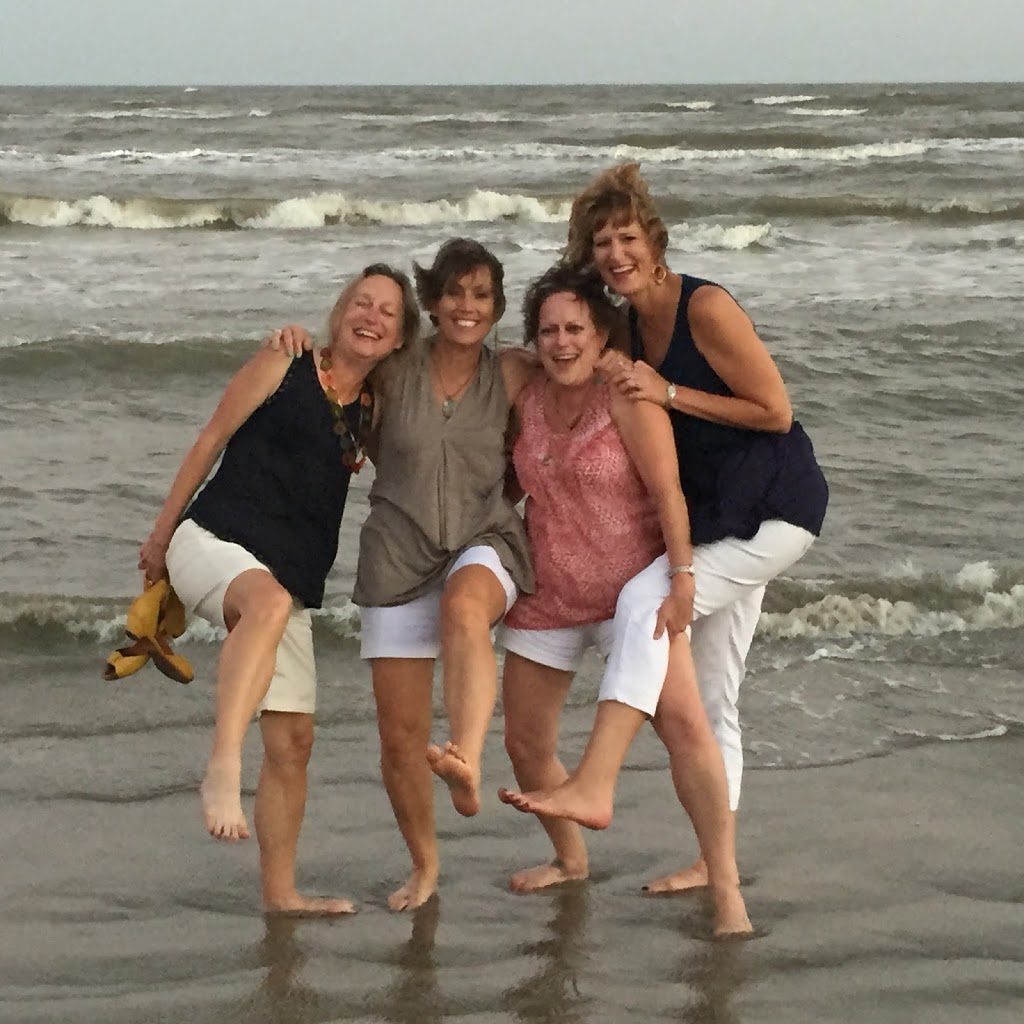
I also fondly remember our family vacations to the Gulf Coast. My great-grandparents’ arrival in this country through the immigration port of Galveston is not my only connection to the island. When my parents could afford a vacation, they took us to Galveston, Texas. We always stayed at the same motel, the Silver Sands, right across the street from the beach. When I reminisce about those times, I close my eyes and hear the roar of the waves, and smell the scent of the Gulf of Mexico. It was almost prophetic that I would marry a man from Galveston. When he was a teenager, he hung out on the beach from dawn to dusk. I like to humor myself and believe I saw him once on one of those family vacations. My dad even teased me once about a boy who kept staring at me when we were on the beach.

There’s so much I love about Texas, but my hometown, heritage, and the beaches of the Gulf Coast hold a special place in my heart. I no longer live in Texas, but I do live on an island in the Pacific Northwest. The smell of the Pacific Ocean is slightly different than the Gulf, but that’s okay—it’s saltwater.
I’m grateful that my great-grandparents immigrated to this country. In 1987, President Ronald Reagan designated October 28 as a day of reflection and celebration, recognizing the nation’s heritage as one of immigrants. That celebratory day is a few months away, but perhaps it’s a good time to remember how many Americans owe their citizenship to the immigration of their ancestors.
3 Responses
I’m not that much of a internet reader to be honest but
your blogs really nice, keep it up! I’ll go ahead and bookmark your site to come back in the future.
All the best
Thanks, Sara.
Thanks!